All intense pulsed light devices have a range of intensity settings to help users adjust the treatment according to their specific needs.
But as a beginner, how do you know which intensity to use for your skin type? To guide you in your choice, we recommend using intense pulsed light comparisons.
We will answer this in this article by helping you identify your phototype.
Key takeaways
| Topic | Key Information |
|---|---|
| Intensity of a pulsed light | Measured in joules per square centimeter (J/cm²). The higher the intensity, the greater the amount of energy delivered to the skin. |
| Operating principle | Short bursts of light are absorbed by melanin, converting light into heat and damaging the hair follicle. |
| Flash power | Lighter skin tones and darker/thicker hair require more powerful flashes. Power usually ranges from 3 to 9 J/cm². |
| Wavelength range | IPL uses a wavelength range between 550 and 1200 nm, covering both the visible and near-infrared spectrum. |
| Fitzpatrick scale | Classification of skin types based on their reaction to the sun. From Type I (Very fair skin) to Type VI (Dark skin). The recommended intensity varies according to the skin type. |
| Intensity for hair type | Blond hair (low intensity, very fair to fair skin), chestnut hair (medium intensity, medium-toned skin), brown hair (medium to high intensity, tan skin), black hair (high intensity, brown to black skin). |
| Usage advice | Start at low intensity and gradually increase. Always consult the user manual and, if in doubt, seek professional advice. |
What is the intensity of a pulsed light?
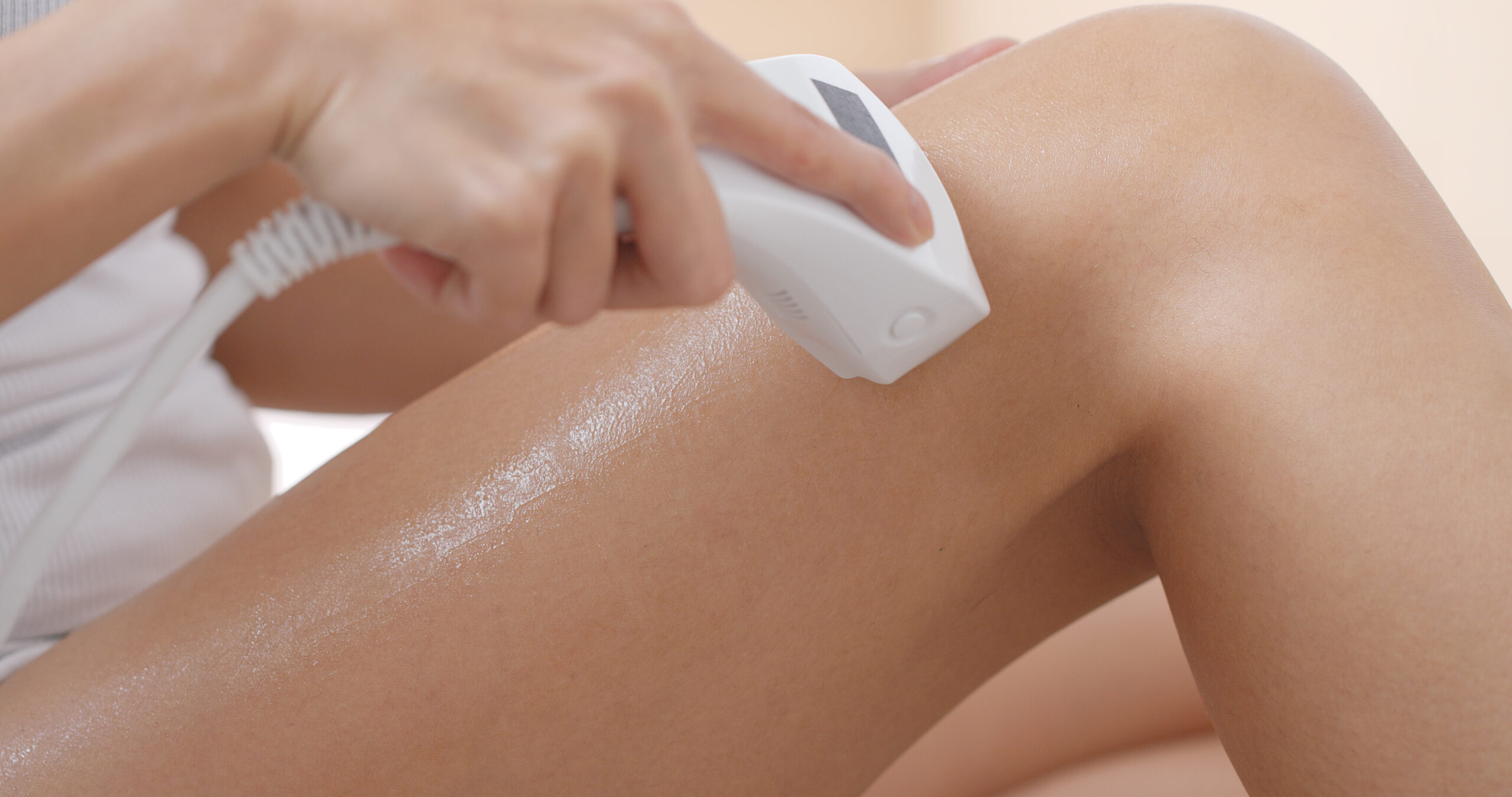
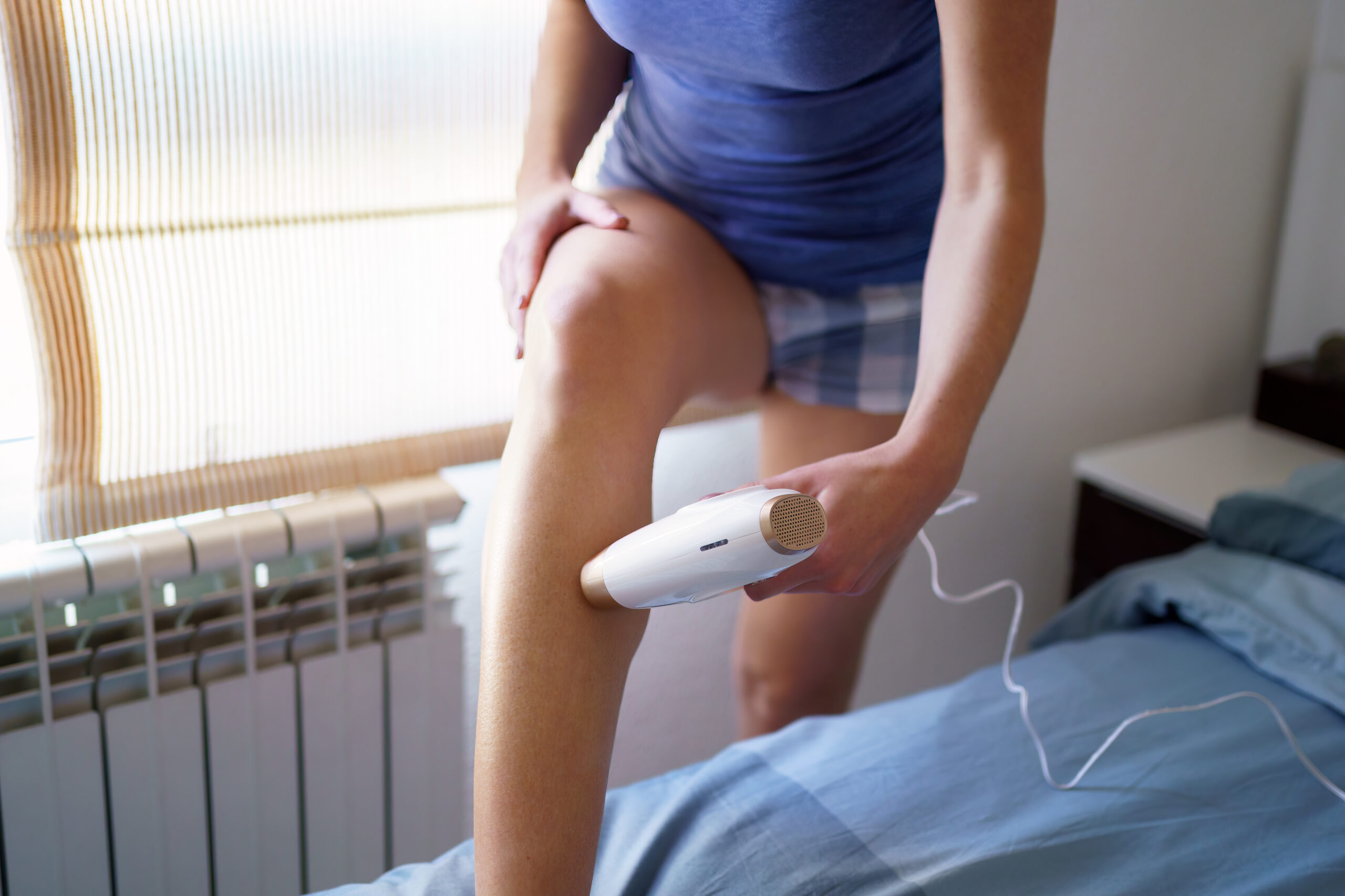
The intensity of a pulsed light refers to the amount of energy an IPL device emits when in use.
This energy is typically measured in joules per square centimeter (J/cm²). The higher the light intensity, the greater the amount of energy delivered to the skin.
The IPL principle works by emitting short bursts of light that are absorbed by melanin (the dark pigment found in hair).
The light energy is then converted into heat, which damages the hair follicle and inhibits hair growth.
It is important to use the recommended light intensity for your skin and hair type so the device can be as effective as possible and avoid any side effects.
The power of an IPL device’s flashes
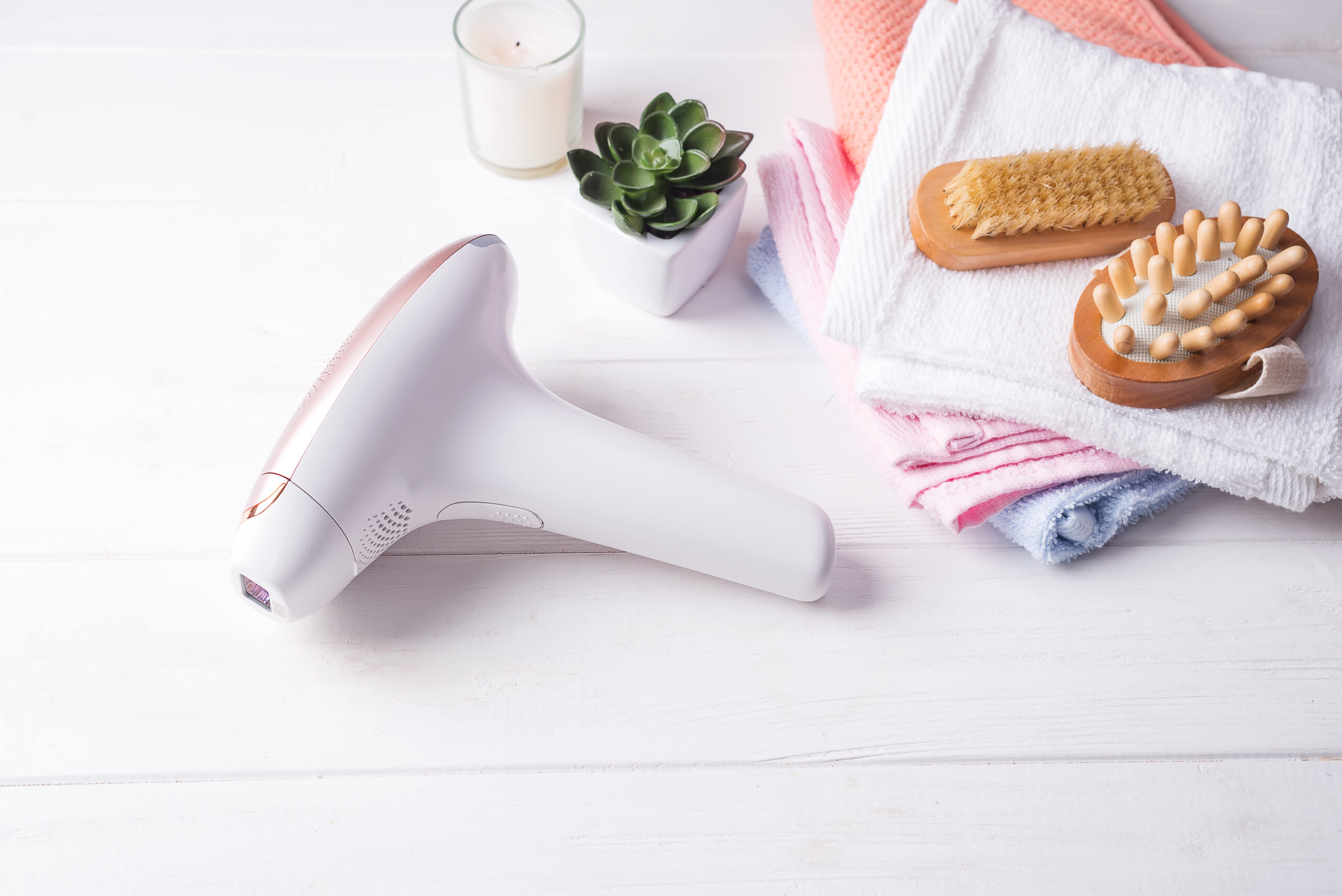
Most IPL devices allow users to adjust flash power depending on their skin and hair type. Generally, lighter skin and darker, thicker hair require more powerful flashes for effective results.
Flash power usually ranges from 3 to 9 joules per cm², depending on the device. This power is regulated based on your skin type and the area being treated.
For areas where your skin is thinner, such as the bikini line or underarms, we advise choosing an IPL device specifically designed for the target area. The power level will then be adjusted for these more delicate zones. Choosing the proper power and intensity lowers the risk of hair that doesn’t fall out after IPL.
The range of wavelengths used
IPL uses a broad range of wavelengths, rather than a single wavelength as with lasers.
The wavelength range used in IPL treatment is between 550 and 1200 nm, which corresponds to light waves in the visible and near-infrared spectrum, outside the range visible to the human eye.
The light spectrum used in IPL allows different depths of penetration into the skin, making the treatment effective for a variety of areas and skin types.
You may be interested in: Is IPL carcinogenic?


You might enjoy this article: Braun: My Review of Their IPL Devices
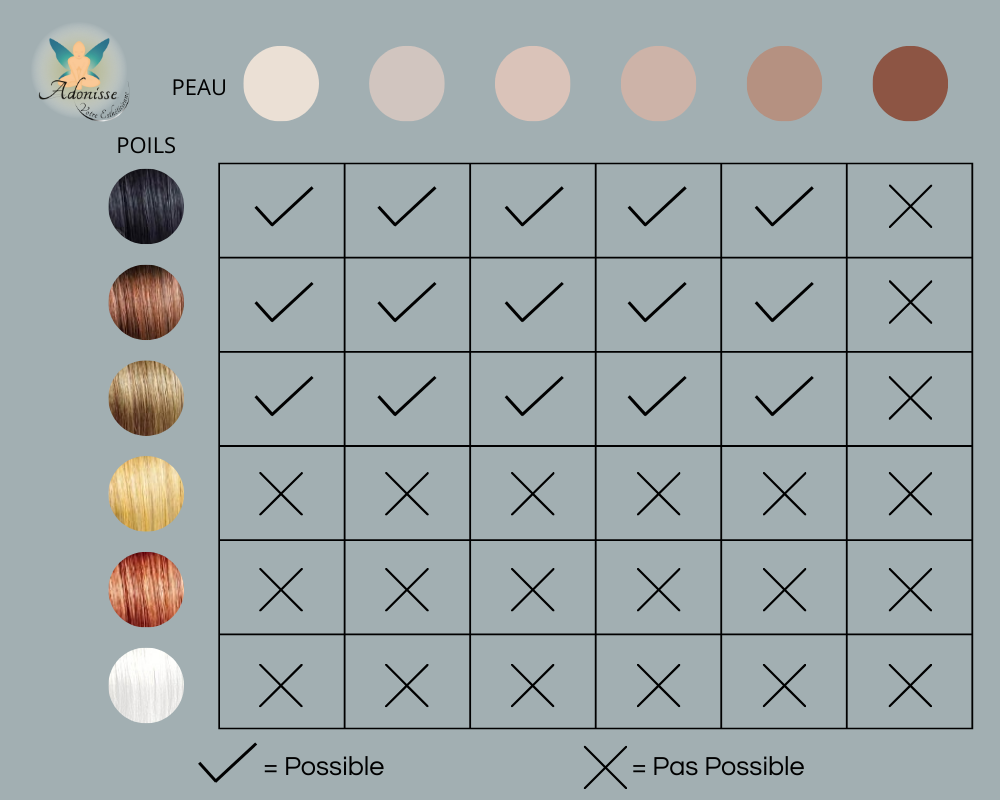
What power level for which skin type, with an explanatory table
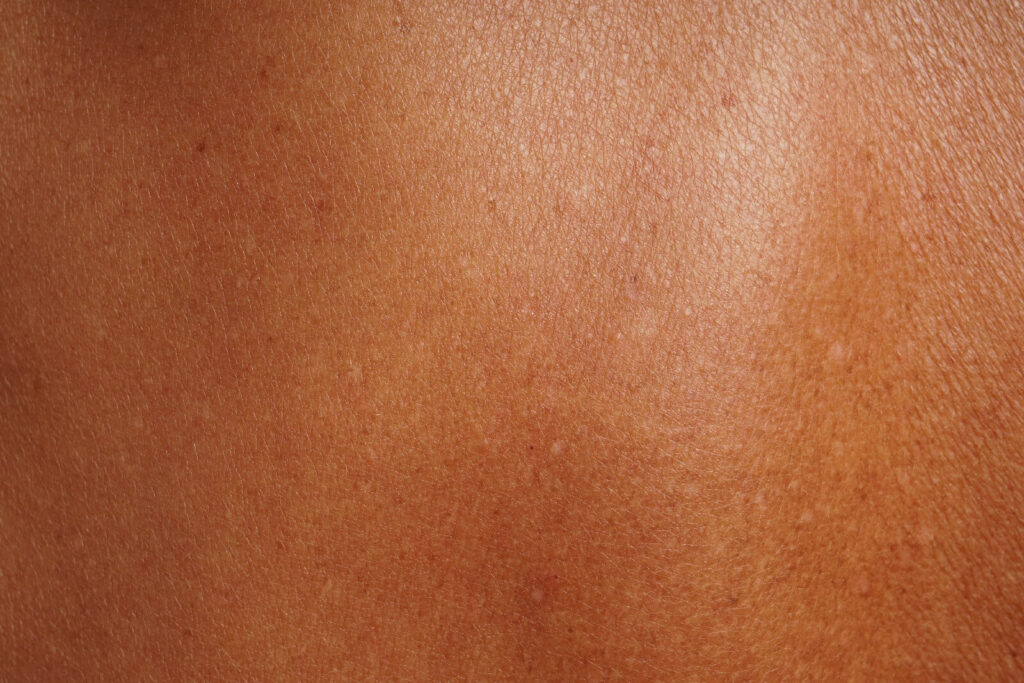
To determine the appropriate power setting, the Fitzpatrick scale is often used. This scale classifies skin types based on their reaction to the sun.
Table of different skin types
Type I – Very fair skin
This skin type is extremely fair and extremely sensitive to the sun. It tends to always burn and never tan. For IPL treatments, it is recommended to use a low-power setting to minimize the risk of burns or discoloration. This is the skin type most sensitive to radiation.
Type II – Fair skin
This skin type is fair and can burn easily, especially without adequate protection. It rarely achieves a deep tan. When using IPL, opt for a low to medium setting. Special care is needed to avoid adverse reactions.
Type III – Medium-toned skin
People with this skin type have a medium tone and may occasionally burn, but they tan gradually. For IPL, a medium setting is generally suitable. Some individuals may even tolerate a slightly higher setting.
Type IV – Tanned or mixed-race skin
Tanned skin is less likely to burn and tans more easily. For IPL treatments, you can consider using a medium to high power setting, depending on individual tolerance. However, it is always wise to proceed with caution.
Type V – Brown skin
Brown skin rarely burns and can tan very effectively. A higher power setting may be required for effective results with IPL. However, considerable caution should be used to avoid any risk of burning or pigmentation changes.
Type VI – Black skin
People with black skin generally never burn and have very pigmented skin. IPL is usually not recommended for this skin type due to the increased risk of burns and pigmentation changes. If IPL is used nonetheless, it should be at a low power setting and under the supervision of a professional.
What intensity for your hair type?
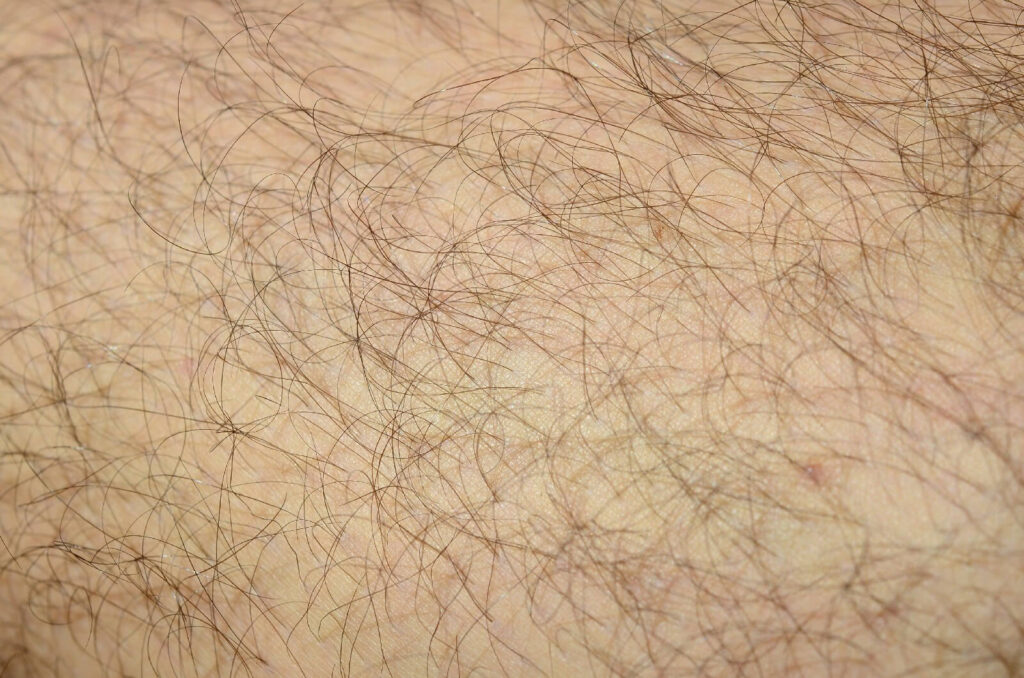
Blond hair
- Often associated with: Very fair to fair skin.
- Characteristics: This hair is often fine and has low pigmentation. It can sometimes be hard to treat due to the minimal pigmentation, which limits light absorption.
- Recommendation: For individuals with blond hair, a lower IPL intensity is often recommended. However, it’s crucial to consult a professional to assess potential treatment effectiveness and determine the proper setting.
Chestnut hair
- Often associated with: Medium-toned skin.
- Characteristics: Chestnut hair can vary in thickness and pigmentation. It falls between blond and brown in terms of pigmentation, offering better light absorption than blond hair.
- Recommendation: A medium IPL intensity is often recommended for chestnut hair. Still, it’s essential to adjust intensity based on the skin’s individual reaction to the treatment.
Brown hair
- Often associated with: Tan skin.
- Characteristics: Brown hair is generally thicker and more pigmented, making it more responsive to IPL treatments.
- Recommendation: A medium to high intensity is often suitable for IPL treatments on brown hair. However, it’s always recommended to start at a lower intensity and adjust as needed based on how the skin tolerates the treatment.
Black hair
- Often associated with: Brown to black skin.
- Characteristics: Black hair is the thickest and darkest, with strong pigmentation that makes it ideal for IPL treatments.
- Recommendation: A high IPL intensity can be effective. However, individuals with very dark skin should be cautious and consider professional advice due to the risks associated with their skin’s pigmentation.
Conclusion
To ease into it, use your device at a low intensity setting and gradually increase it while monitoring your skin’s reaction.
Of course, read your device’s manual to use it safely and achieve optimal results.
If you are unsure about your skin type, consult your esthetician or a dermatologist for extra reassurance.
FAQ
IPL hair removal devices can have a single (manual) or continuous flash mode, or even both.
The single mode allows for precise hair removal and is ideal for the bikini line or face.
As for the continuous mode, it allows for continuous flashing, simply by sliding the device along the area you wish to treat: a considerable time saver for leg hair removal!